 |
MICHAEL G. BARBOURwww.mgbarbour-emeritus-vegetation.com
|
|
 HOMEPAGE |
|
MICHAEL G. BARBOURwww.mgbarbour-emeritus-vegetation.com
|
|
HOMEPAGE |
MOST SIGNIFICANT CONTRIBUTIONS (16)
PUBLICATIOs (156)
CONTACT
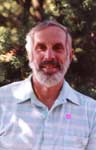
Michael G. Barbour
Plant Ecologist, Emeritus
Plant Sciences Dept.
University of California, Davis 95616
Cell: (530) 304-4772
Fax: (530) 752-4361
Home Phone, best contact:
(530) 795-2009
Email: mgbarbour@ucdavis.edu
EXPERIENCE SUMMARY. I have been at UCD since 1967, initially as a faculty member in the Botany Department, then sequentially moving to Plant Biology, Environmental Horticulture, and Plant Sciences. I retired in 2007.
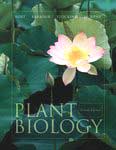
My teaching and research experiences have been in introductory plant biology, plant ecology, forest ecosystems, fire ecology, plant communities of California, and concepts and methods in plant community ecology. I've been a co-author of textbooks for introductory plant biology, plant ecology, and the vegetation of California and North America.
My research has been on the vegetation of such habitats as coastal dune, tidal salt marsh, montane conifer forest, vernal pool, Mediterranean-climate wood-land, and warm desert scrub. My focus was on determining how vegetation or dominant species tolerate and respond to particular environmental stresses such as salt spray, soil salinity, competition, snow pack, summer drought and heat, freezing temperatures, fog, soil structure, and wildfire. Some of my research has been done abroad in Argentina, Australia, Baja California, Isreal, and Spain.
CURRICULUM VITAE
PRESENT POSITION: Professor Emeritus of Plant Ecology, Department of Plant Sciences, University of California, Davis, CA 95616-8587, USA. Telephone 530- 752-2956 (office), 530-795-2009 (home), 530-752-4361 (fax), 530-304-4772 (cell), and mgbarbour@ucdavis.edu (email).
EDUCATION: BSc in Botany, Magna Cum Laude, Michigan State University, East Lansing, MI, 6/63; PhD in Botany, Duke University, Durham, NC, 9/67 under Professor W.D. Billings.
AWARDS: Fulbright Fellow, University of Adelaide, South Australia, 1964; NDEA Fellow, Duke University, 1965-67; Guggenheim Fellow, 1978; Outstanding Teaching Award, University of California, Davis, 1989-90; Visiting Professor, Marine Sciences Department, Louisiana State University, 1984; Visiting Professor, Botany Department, Hebrew University, Jerusalem, Israel, 1989-90; Visiting Professor, Plant Biology Depart- ment, Universidad Complutense, Madrid, Spain,1999; Visiting Professor, Botany Depart- ment, Universidad de La Laguna, Tenerife, 2003; Humanities Institute Fellow, University of California, 1994; Fulbright Senior Specialist awards to attend Instituto Superior de Agro- nomia, Departmento de Fitoecologia, Lisbon, Portugal, 2005 and to attend the Universi- dade do Sassari, Departimento do Botanica, Sassari, Italy, 2009.
GRANTS: Recipient of research grants from National Science Foundation, NOAA Sea Grant Program, USDA Forest Service, US State Department (MAB Program), Packard Foundation, USDA Competitive Grants Program, US Environmental Protection Agency, California Department of Transportation, US Fish and Wildlife Service, California Depart- ment of Fish and Game, California Department of Parks and Recreation, University of California Pacific Rim Program, and the California-Barcelona Cooperative Research Program, University. of California.
EDITORIAL BOARDS: Madroño, 1974-1976; American Midland Naturalist, 1985- 1987; Ecology, 1985-1988; University of California Press, 1995-2000; Journal of Vegetation Science, 1997-2002; Folia Geobotanica, 1997-present; Phytocoeno- logia, 2003-present.
PROFESSIONAL OFFICES AND MEMBERSHIPS: Vice Chair/Chair, Vegetation Section of the Ecological Society of America, 1993-95; Vice Chair/Chair, North American Chapter of International Association for Vegetation Science, 1999-2003; Member/Chair, National Panel on Vegetation Classification, 1995-2009; member of American Institute of Biological Science, Botanical Society of America, British Ecological Society, California Botanical Society, Ecological Society of America, International Association for Vegetation Science, and California Native Plant Society.
TEACHING: Undergraduate lower division introductory courses in general Plant Biology and Plant Ecology; advanced undergraduate courses in Vegetation of California, Forest Ecology, Fire Ecology,and Nature and Culture (cofounder of the Nature and Culture major for undergraduates); graduate courses in sampling and describing vegetation. Author or co-author of textbooks for Plant Biology, Plant Ecology, Vegetation of California, Vege- tationof North America, Coast Redwood Region, and Coastal Ecology. Past or present supervisor of 50 PhD or MSc recipients.
RESEARCH: Autecology and synecology of plants and vegetation in stressful environments, including marine strand, tidal salt marsh, vernal pools, warm desert scrub, mixed evergreen forest, oak forest, and montane conifer forest. Research conducted in Alta and Baja California along the Pacific coast of North America, on the Gulf of Mexico coast, in northwestern Argentina, in southern Australia, in coastal and arid parts of Israel, in mountains of central-to-northern Spain, in mountains of the Canary Islands, and in mountains of Coast Range and Sierra Nevada of California.
MOST SIGNIFICANT CONTRIBUTIONS (16)
PUBLICATIONS (156)